The Art of the Big Band
by Chuck Reider
by Chuck Reider
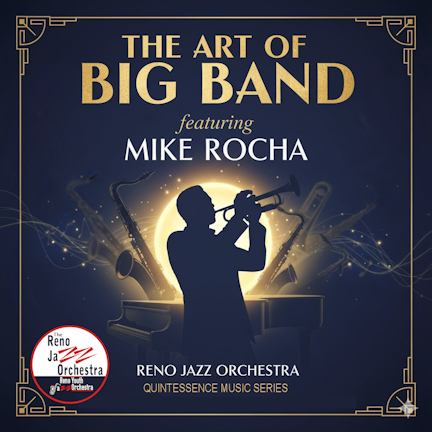
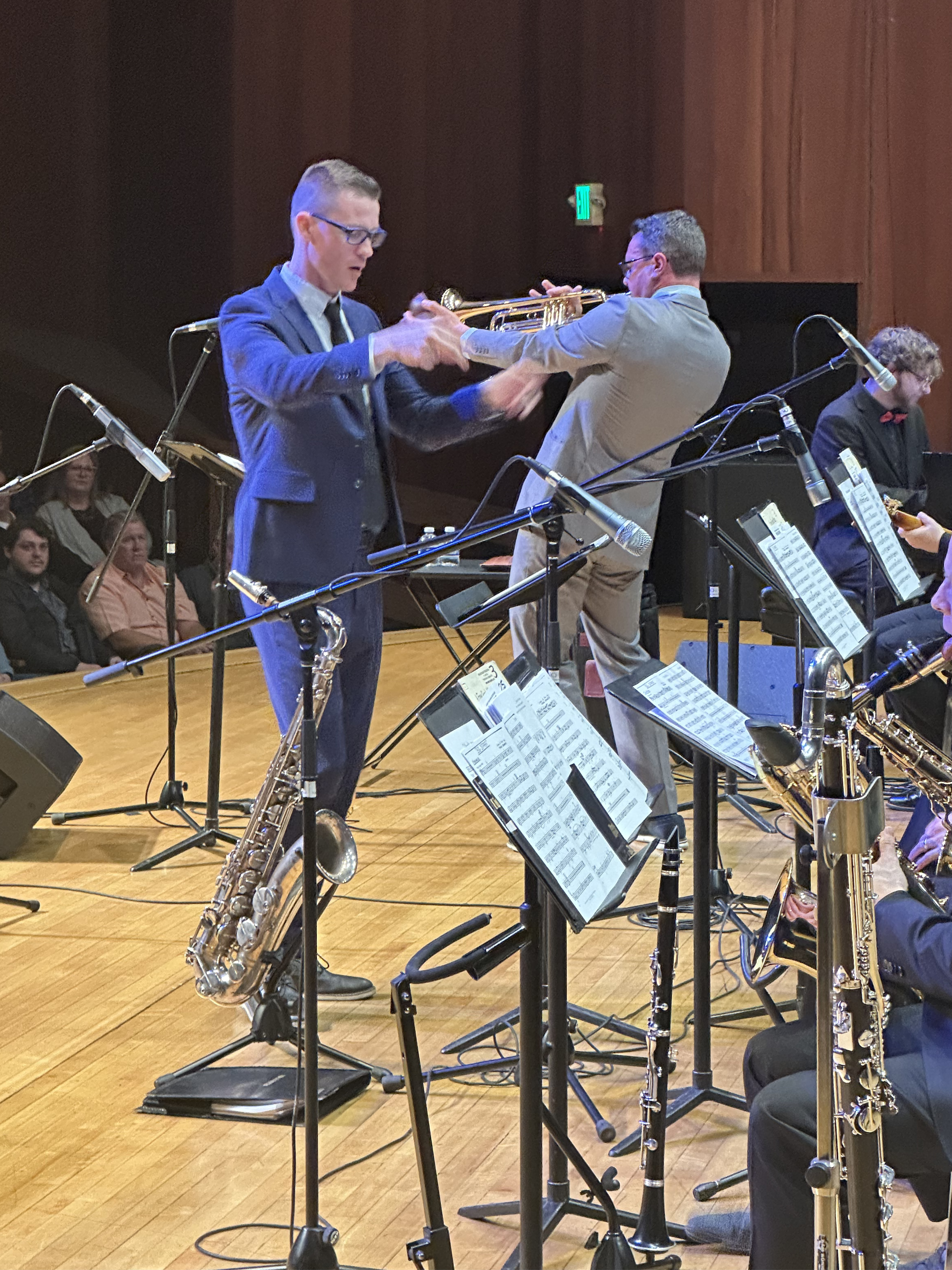
I have been a part of the Reno Jazz Orchestra (RJO) since its 1997 inception, giving me rich experiences from all the generations of big band jazz. On March 8, 2026, the RJO transformed the stage into a time machine, presenting a performance of 100 years of the boldest, brightest, and most swinging big band jazz tunes. RJO’s Music Director, Dr. Greg Johnson, and four-time Grammy-nominated and internationally renowned trumpeter, Mike Rocha, joined the powerhouse music of the 17-piece jazz orchestra for an unforgettable adventure through jazz history.
 I always thought that a big band was primarily a swing era dance band and as band leaders like Duke Ellington and Count Basie explored new sounds, they moved from the dance hall to the concert hall and the jazz orchestra was born. It turns out jazz orchestras date back to the early jazz of the 1920s. Composer/bandleaders such as Fletcher Henderson and Paul Whiteman adopted the name jazz orchestra.
As most of you know, jazz has its roots in New Orleans Dixieland. Dixieland features three horns in front, one playing the melody and the others playing individual lines of their own choice. The piano, bass (often a tuba), and drums provide the framework. Many at the time felt that though jazz was a part of a growing dance craze, it was still rather crude and not to be taken as serious music. That changed during the 1920s with Paul Whiteman’s Orchestra.
Paul was a violist who began his career with the Denver Symphony Orchestra and after a stint in the Navy formed the Paul Whiteman Orchestra. Dance bands of the day typically had six to ten musicians, his jazz orchestra would be as large as 35. By 1922 he had 28 ensembles on the east coast and was earning over $1,000,000 a year! His 1924 concert at the Aeolian Hall capped off by the performance of George Gershwin’s Rhapsody in Blue is considered the moment jazz evolved from folk music to an art form. He was criticized at the time for trying to “make a lady out of jazz” but the stage had been set for generations of jazz orchestras.
Many great band leaders over the years have followed Paul Whiteman’s and Fletcher Henderson’s lead, bringing new ideas and styles to the concert hall. Forward thinking and progressive. Duke Ellington introduced the sacred concerts in a church setting, original suites such as Such Sweet Thunder, a tribute to William Shakespeare. Count Basie elevated blues and infectious swing to new heights. Stan Kenton expanded the typical band to include mellophoniums, French horns, and tubas creating what was to be called “the wall of sound.” Thad Jones, Maria Schneider, WDR big band, and the Village Vanguard Jazz Orchestra are just a few orchestras that have taken the jazz orchestra in new directions for new audiences. Today there are eight major national jazz orchestras and 24 regional national jazz orchestras including the RJO.
Here is a quote from an attendee at our recent concert:
“And, what a fabulously enjoyable concert! (as an internationally acclaimed trumpeter proclaimed to the audience, while pointing to the RJO just before the last piece) “You have something really special here… not every city has this.”
May 10, 2026 is our next concert featuring vocalist Nicolas Bearde paying tribute to the great Al Jarreau. Experience our own jazz orchestra (RJO) live! More info and tickets.